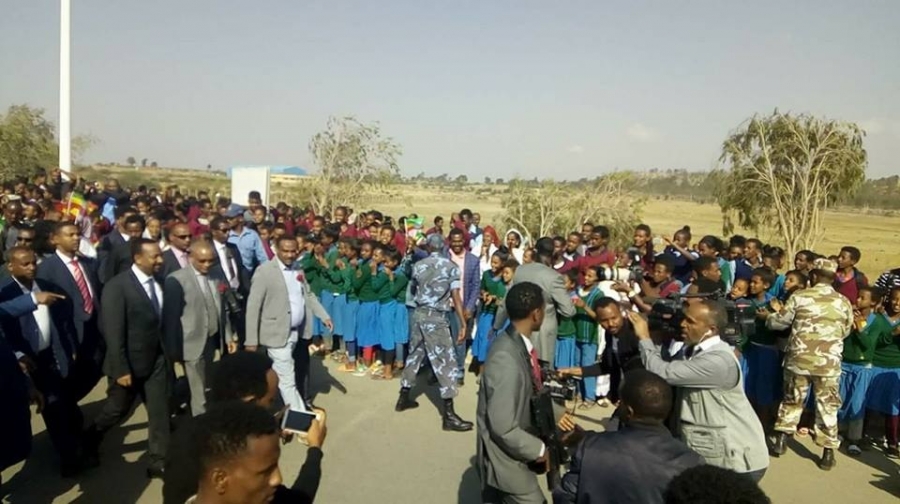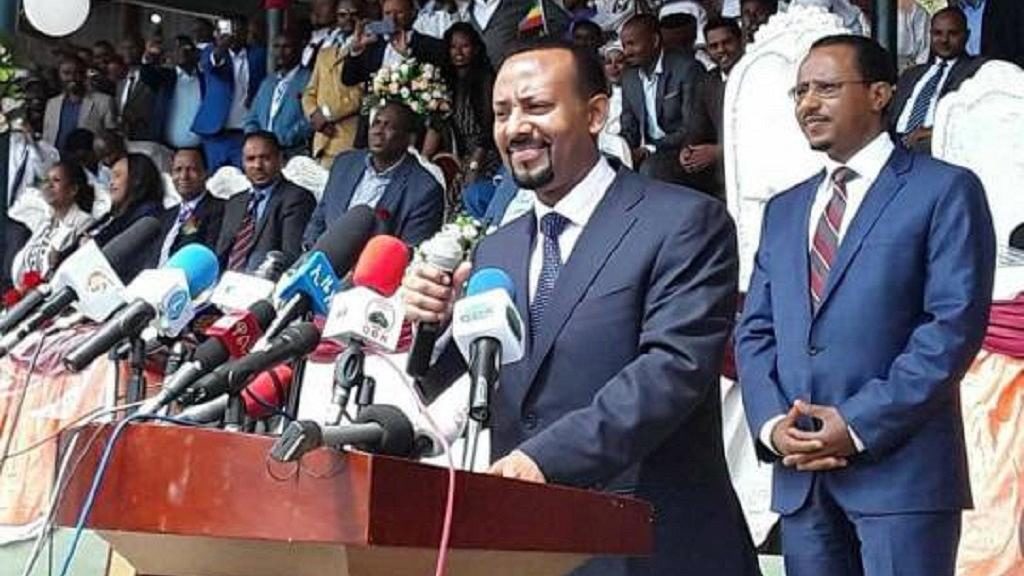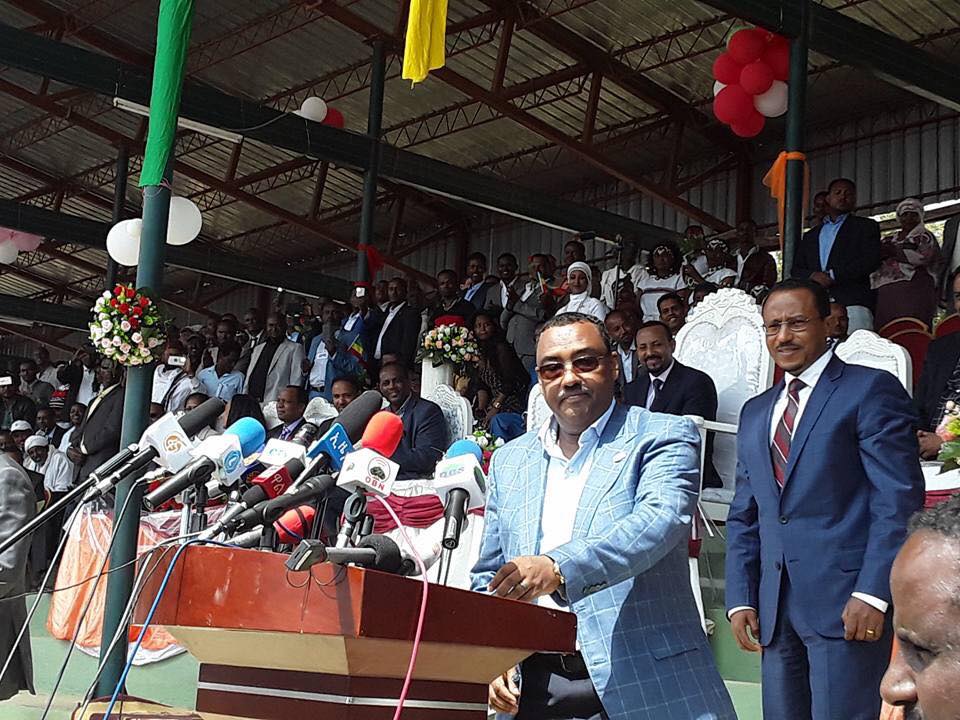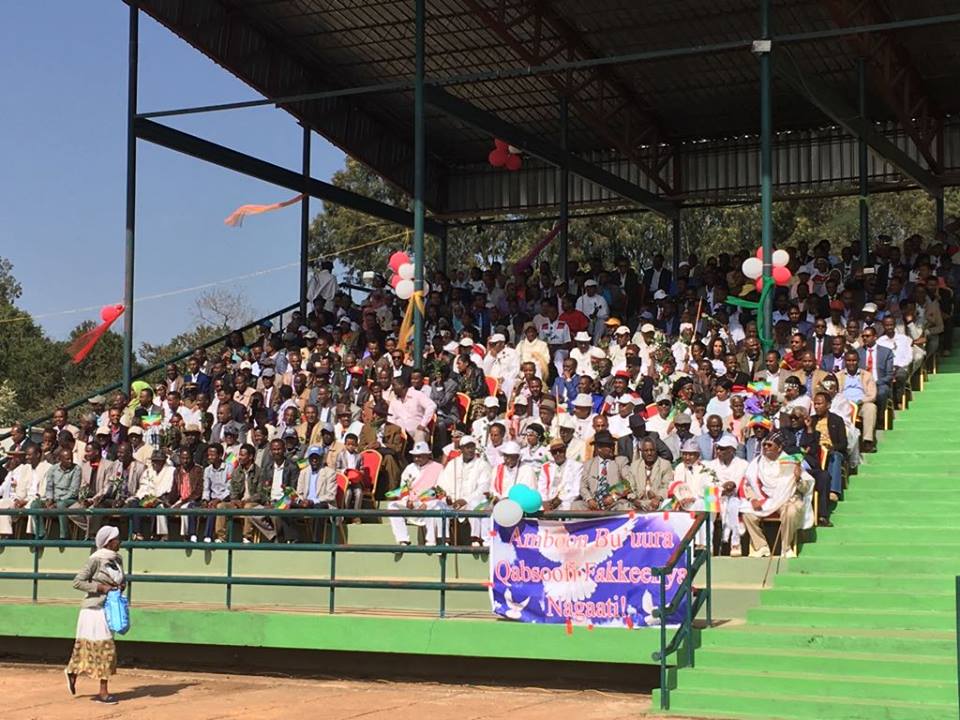
Prime Minister Abiy Ahmed held discussions with the residents of Ambo town (Oromia region) today.
In his address to the public who converged in Ambo Stadium starting from 10:00 a.m, the Premier tackled various local, regional and national political, social and development issues related to the current situation in the country.
Ambo is a town some 120 km west of the capital Addis Ababa, was not long ago that hit by protest against the Addis Ababa and Surrounding Oromia Special Zone Integrated Master Plan.
In mid-April 2014, the government announced its readiness to implement the master plan in a bid to develop the capital Addis Ababa and the vicinity of Oromia Special Zone in an integrated manner.
However, this move provoked an immediate reaction from some university students across the Oromia region, and Ambo was one of the towns that resisted the implementation of the master plan.
The town remained the heartbeat of spreading protests that started in late 2015 through to the reform of the ruling EPRDF party and the appointment of the new Prime Minister Abiy Ahmed.
But now residents of Ambo town expressed their joy in the visit of the Prime Minister with the expectation that such a visit would be instrumental in finding viable solutions to public demands in various areas of socio-economic development of the town and the country at large.
Geremew Belay, a young resident of Ambo Town, said:
“Upon hearing that the Prime Minister will make a working visit to our town, we were excited to welcome him, and we are preparing a list of socio-economic challenges that the town is facing. We are optimistic that his visit will play a major role in solving a number of development problems the town is facing.”
Aster Nemera, a woman residing in Ambo town said “The visit of Prime Minister Abiy Amed to our town would usher a new hope and opportunity for the improvement of the livelihood of women in the town. We are also expecting the development of manufacturing industries in the town. She also said that Ambo Town Administration is expected to effectively respond to the development needs of the women in the town.”
Mekonnen Bedada, another resident of Ambo town, said the town administration needs to work in collaboration with the government to resolve public grievances in the areas of infrastructural developments like roads, potable water and electricity.
He added that the visit of the Prime Minister would help to speed up the positive responses to the development needs of the town.
In his visit to Ambo today, the Premier will also confer with representatives of the public, elders and youth groups.