Ethiopia’s Post-war Renaissance and Fight against Poverty

This article was originally published in the 8th issue (October 2017) of The Ethiopian Messenger, the quarterly magazine of the Embassy of Ethiopia in Brussels.
The current developmental efforts of Ethiopia dates back from the end of the Derg regime, when a coalition of resistance fighters overthrew the oppressive and brutal communist junta which divided the country and failed to lead to create a stable and prosperous nation. Since the establishment of the Federal Democratic Republic of Ethiopia in 1991 and the adoption of the 1995 Constitution, the country has been fighting against its only real enemies: poverty and the lack of good governance.

Late Prime Minister Meles Zenawi (1955-2012), who developped and implemented the Agricultural-led Industrialization policy. Image by WEF/Monika Flueckiger

The post-Cold War Era’s surge in conflicts and civil wars that fragmented weak states in smaller entities has often been simplistically blamed on ethnic or religious strife. However, countries like Ethiopia demonstrate that dysfunctional governance, inefficient institution and societal frustrations are much more lethal than cultural or ethnic diversity. After the end of the Cold war, the African continent was particularly affected by protracted wars which claimed the lives of millions of innocent civilians, considerably damaged their environments and destroyed their young economies.

From the 1970s to the late 1990s, the accumulation of grievances fostered nationalism and tensions on many countries, which resulted in some of the bloodiest civil wars in human history and forced the international community to adopt self-determination as an integral part of the international law. Sadly, while a high number of emerging and developing countries being integrated into the global market and making technological progress, the African continent is still not entirely immune from the evils of civil war, destruction and displacement.

What went wrong?

For decades, Ethiopia suffered from the evils of totalitarianism, which resulted in a three-decade-long bloody civil war. The conflict did not only cripple the politico- economic apparatus of the country, but also impacted its territorial sovereignty with the secession of Eritrea in 1991. Prior to the end of the civil war, neither the Derg regime, who took power from Emperor Haile Selessaie in 1978, nor the Imperial regime tolerated opposition or dissidents.

The suppression and oppression of ethnic identities in the country borne armed liberation struggles, particularly in the northern part of the country, with the creation of the Tigrayan People’s Liberation Front (TPLF). The North’s initial struggle progressively came to engulf all major ethnic groups of the country to stand in line with the TPLF. The Derg regime waged a full-scale, fratricide war for years against the various nationalities of the country, with fellow countrymen fighting each other because of their divergent views for the future of Ethiopia.

Peace negotiations failed one after another, as the regime chose to crush the liberation movement by deploying its considerable military strength, as the Communist Derg regime had been working for years on building one of the strongest military power in Africa.

War games before Development

Under the leadership of Mengistu Hailemariam, the Derg managed to establish powerful military capabilities at the expense of the socio-economic well-being of its citizens. All policy direction, as well as bilateral and multilateral cooperation during that time were mainly defined by the war, with the exclusive objective of crushing the rebellion. Eventually, this obsession jeopardized the very existence of the country, which was affected by its deadliest famine in the 1980s, adding thousands of deaths to the lives already lost in the scourge of civil war. The “Everything to the war front” motto of the regime weakened Ethiopia’s energy and its meager economic resources that otherwise could have been directed to the development of the country. Too busy dealing with the fierce struggle movement in the northern part of the country, the Derg regime neglected institutions and infrastructure crucial for development and failed to create a stable and prosperous nation.

In addition to destabilizing the country itself, the Communist junta was also a major destabilizing power in the Horn of Africa, in a similar way as the incumbent regime of Eritrea. The country was exposed to all sort evils of maladministration. Poverty, ethnic cleansing and arbitrary killing were common under the Derg regime. Conscription and political torture pushed many of Ethiopia’s children to leave the country, taking with them knowledge and qualifications essential for its development.

Missing Rights

The concepts of democracy and development were also alien to this administration whose main preoccupation was terrorizing its own people. Both the real or perceived relations of power and subordination among the peoples of Ethiopia led to systematic abuse and injustice. Human rights, democratization and freedom of religion were completely suppressed, placing a one-man political structure over the rule of law. Executing and imprisoning tens of thousands of its opponents without trial, designating neighboring countries and imperialism as the enemies of the country and supporting irredentist movements in the Horn of Africa were other characteristics of the regime. Assessing the fragile situation of the country, the government of Somalia led by Mohamed Siad Barre waged full-scale war against Ethiopia in 1977-78.

However, the contribution of the Derg in strengthening Pan- Africanism is worth mentioning. The late PM Meles Zenawi himself noted that “irrespective of what government ruled Ethiopia, Ethiopia has always been committed … Internally Mengestu was a butcher, but on the issue of Africa, Mengstu was as solid as Haile Selassie was”. The regime also has a good track record of reducing the illiteracy rate via basic education. But these qualities do not compensate for the years of development lost by the regime’s leadership until it was overthrown by the EPRDF and ELF in 1991.

The Prospects of Ethiopian revival

The toppling of the Derg’s powerful army by the liberation movement created worry as to the future of the country. After decades of civil war, few Ethiopians could perceive the hope and possibilities offered by the new government. Various experts even predicted the full-scale disintegration of the country. As a first step toward normalcy and stability, popular consultations were made to integrate the views of the people into the future of Ethiopia. Federalism came to be the political prescription to heal the wounds of a nation inflicted to years of suppression of its multicultural nature.

The proclaimed Constitution of 1995 established not only the Federal Democratic Republic of Ethiopia, but also guaranteed all political, social and economic rights of the people, which had been denied for long.

Constitution of the Federal Democratic Republic of Ethiopia adopted in 1995

Poverty, a common enemy

The new structures of the state were established to respect the free will of the Ethiopian people determined and create one political and economic community. Self-governance and determination up to secession, decentralization of power and human rights are the salient features of the Constitution. After dedicating the first post-war decade to the stabilization of the country, the government was able to turn itself towards economic development. The new state had inherited from the Derg a troubled, poor and devastated country. The EPRDF leadership had no choice but to face the undeniable and sad reality of the country.

In these conditions, the persistence of poverty and the absence of good governance and democracy were quickly identified as the sole enemies of Ethiopia, and like in any war against a foreign enemy, winning these evils was considered as a matter of survival. The depth of this war was best expressed by former Prime Minister Meles Zenawi, who stated: “If we must shoot and kill, we chose to shoot at poverty.” Over the years, the Agricultural- led Industrialization policy, taking the state investment and private sector as the engine of the economy, pushing for industrial development, attracting investments and heavily investing in education and health policies started to bear fruits as millions were lifted from the quagmire of poverty, as proved by Ethiopia’s MDG’s achievements. As a country, Ethiopia managed to register impressive economic developments and attracted FDI.

Opening to the world

Thanks to this remarkable transformation, today’s Ethiopia is not anymore the weakened Ethiopia of the 1980s. Imperialism and our neighboring countries are no more seen as our enemies. Contrary to past governments where all attention focused on challenges at home and minimizing external threats in relation to it, Ethiopia is now investing in mutually beneficial relationships and regional economic integration to enhance its own and its neighbors’ peace and security. Its foreign policy direction is centered on Business and Economic diplomacy. Peace and security were also prioritized to swipe our fight against poverty and backwardness. The Ethiopian people is now capable of managing gigantic projects such as the Great Ethiopian Renaissance Dam from their own coffers. The peaceful atmosphere of the country is allowing its citizens to tirelessly working to make Ethiopia great again. The consecutive double-digits economic growth of the last fifteen years enabled the country to inject its own finance into drought relief efforts, which was previously carried solely by the international aid. Amid stiff global competition to attract FDI, Ethiopia is now a country that managed to attract investors and create job opportunities for its nationals. While taking part in shouldering Africa’s peace and development and being vocal on the global stage, Ethiopia is sheltering over 800,000 migrants fleeing from neighboring countries.

The road ahead

However, Ethiopia’s path to economic development and democratization is not a smooth sail and difficulties remain. Both the internal and external situations affected Ethiopia’s struggle towards creating a strong nation. We have learned from our history and even from the invasion by the Eritrean government that our own internal situation determines its survival. Being located in the Horn of Africa in itself is a major challenge. The fragility of Somalia, South Sudan, Eritrea, the situation in Yemen and the recent Gulf crisis all pose a serious threat to Ethiopia. The government is well aware that sustaining our peace and development internally will not be sufficient unless it is reinforced by the stability and development of our respective neighbors.

Internally, the issues related to good governance, corruption, abuse of political power and mismanagement, extremism and terrorism remains our Achilles heel. The policies we have pursuing are still bearing fruits. However, there are visible hiccups in their implementation. The sporadic unrest that claimed the lives of our nationals and destructed properties in the country is mainly linked to this matter despite some external involvement. Taking this into account, the government swiftly evaluated itself and came up with deep renewals measures coupled with mass consultation. The deep renewal measures intend to address the shortcomings witnessed in terms of socio-economic and political challenges. More than ever, the political dialogue between the government and political parties is progressing to expand the political space and deepen our determination for democratization. The government is also taking fierce measures on its incompetent or corrupt leadership. If the country manages to implement these deep renewal measures with determination, nothing will stand in our way to progress and democracy. The country’s Growth and Transformation Plan and the overall results registered so far are clear manifestations of our zealous vision in realizing the Renaissance of our country and ultimately creating one Political and Economic Community. We hope our partners will be able to see and share this ambitious project through their bilateral and multilateral cooperation they are pursuing with Ethiopia.

Khartoum Process: 2017, Year of implementation

Ambassador Teshome Toga − Khartoum Process – Thematic Meeting on International Protection and Asylum at the Bundespresseamt, Berlin, 18.05.2017. Copyright: Ronny Hartmann/photothek.net

Foreword to the first newsletter of the Khartoum Process. By H.E. Teshome Toga, Ambassador Extraordinary and Plenipotentiary of the Federal Democratic Republic of Ethiopia to the Benelux and Baltic countries and to the European Union

In December 2016, the chairmanship of the Khartoum Process (KP) was handed over to Ethiopia following that of the UK. As this was more or less a year after the Valletta summit, it accorded the Ethiopian Chairmanship the opportunity to focus on the implementation of the action plans and the 16 priority set out in the Valletta outcome. Given the foundations set by the achievements under the UK chairmanship, our task was to consolidate what was initiated by our predecessors and fill in the gaps that were identified at the time of the handover. We then declared the year 2017, under the Ethiopian chairmanship, to be the ‘Year of Implementation’, with full participation of the Member States and our implementing partners.

This newsletter, the first for the Khartoum Process is therefore dedicated to exactly this theme: implementation. Its goal: to provide the latest information on updates from the field and from those projects which fall under its auspices through its specific regional and thematic focus.

Alongside these operational developments, the newsletter will detail the progress the Khartoum Process made, as its role is to Facilitate Dialogue between Africa and the EU on migration. Impetus was given with its significant contribution to the Senior Officials Meeting (SOM) meeting in St Julian, in Malta last February 2016; and now it is my humble view that we are well on track to realise our action plans for 2017. Our successful meeting at Senior Official level in Addis in April this year following St Julian’s, Malta gave us the chance to incorporate the outcomes of the SOM in our plan of action for the KP. This year had a successful thematic meeting in Berlin on international protection in May, where Ethiopia Co-chaired the meeting with its gracious host, Germany. Similarly, another successful thematic meeting was hosted and chaired by U.K. in London in July on human trafficking and smuggling with emphasis on border management. We are looking forward to our next meeting in Khartoum in October later this year, for yet another thematic meeting on root causes of migration, with focus on job creation and remittance. Several follow up activities have been undertaken by the chair and the secretariat, ICMPD in Vienna, particularly the execution of projects financed by EU Emergency Trust Fund (EUTF).

Having outlined the main tasks that have been undertaken, the question still remains as to how much we have done in terms of curbing the irregular migration and the tragedy related to it. No doubt, we have enormous challenges ahead of us. Migration, refugees and IDPs remain significant challenges and now have caught the attention of the international community and humanity at large. The Khartoum process should aim to remain very active in the global migration and refugee compact. Ethiopia, strongly believes our effort should geared to addressing the push factors. Open the avenue for legal migration could possible discourage those who are determined to illegal route. Our collective effort and resolve in fighting the criminals involved in human trafficking and smuggling must be enhanced. Return and reintegration in the spirit of the Valletta outcome also needs to be taken seriously.

In my capacity as the Chair of the KP, on behalf of my government, I would like to thank the EU, AU and all Member States of the KP for their close collaboration and support. I can assure all partners, Ethiopia will certainly remain a responsible and committed partner even far beyond its chairmanship, which we will be handing over to our successors: our Italian friends and colleagues. I would also take this opportunity to thank the ICMPD for its technical and logistical support provided to the Ethiopian Chairmanship. The European Commission’s financial support is also highly appreciated.

With that, I hope you will, through this special edition of the newsletter, find out more about this year of implementation of the Khartoum Process, its activities and how we aim to move forward.

www.khartoumprocess.net

State Minister Hirut bids farewell to the outgoing Italian Ambassador

State Minister of Foreign Affairs Mrs. Hirut Zemene and Italian Ambassador to Ethiopia, Giuseppe Mistretta

State Minister of Foreign Affairs, Mrs. Hirut Zemene bade farewell to the outgoing Italian Ambassador to Ethiopia, Giuseppe Mistretta on Friday the 29th of September 2017.

On the ocassion, the State Minister thanked the Ambassador for his outstanding efforts to elevate the Ethio-Italian relations during his tenure.

Mrs. Hirut also emphasized the need to further promote the long-standing bilateral ties between Ethiopia and Italy as well as strengthen cooperation in regional and multilateral fora.

Prime Minister Hailemariam met with President of Finland in New York

On the sidelines of the UN General Assembly meeting, Prime Minister Hailemariam Desalegn met today the president of the Republic of Finland Saudi Niinisto and discussed on matters of mutual interest.

During the discussion President Niinisto noted that Ethiopia Ethiopia and Finland have long standing relationship and commended Ethiopia’s contribution in stabilizing the Horn of Africa region.

Ethiopia’s economic growth is recognizable, said president Niinisto, as one of the fastest in the world while recognized the pressure on Ethiopia from the flow refugees’ due to conflicts in the region.

Prime Minister Hailemariam extends his thanks to the support Ethiopia is getting from Finland, and said, mainly the support to the education sector is productive and qualitative.

With regards to the economic environment, the Premier explained that the government is trying to improve the business climate and reform programs to improve our system underway. These reform programs, according to him would enable Ethiopia to attract more business from Finland and other European countries.

On the security matters, Prime minister Hailemariam explained the security challenges in the region, especially of the source of refugees in Eritrea. He said that the young Eritreans leave their country because of the policy of the government and that has resulted to a demographic problem in the country.

As Ethiopia strives to fight poverty, it wants peace to prevail in the region, and Eritrea is not an exception, he said. Hence, Ethiopia offers several times for dialogue to solve the border problem and asks international partners to put press on Eritrea to have civilized dialogue.

Finally, the Prime Minister reaffirmed the President of the Republic of Finland and to work closely with his country in various global issues.

Source: Ethiopian Mission, UN

Ethiopia, Italy Sign Cooperation Framework

State Minister of Finance and Economic Cooperation, Admasu Nebebe, and Italian Ambassador to Ethiopia, Giuseppe Mistretta.

The governments of Ethiopia and Italy on Friday signed a cooperation framework that would last for three years.

The cooperation framework is crucial to support the efforts of the Ethiopian government to achieve comprehensive and sustainable development.

Comprehensive and sustainable agricultural development, accessibility of basic services, governance and building capacity of refugees are the focal areas in the cooperation framework, it was indicated.

Through the framework, the government of Italy will extend 125 million Euros development assistance. Of the total assistance the 45 million Euros has extended in the form of grant, while 80 million Euro in the form of loan.

Out of the total assistance 64 million USD will be used to finance the construction of agro-processing parks, value chain development, enterprenerial development, leather industry and drought resilient projects.

The remaining money will be used to carry out the projects for potable water supply and sanitation, health service provision in rural areas, and for expenditures related to administration and migration.

The accord was inked by State Minister of Finance and Economic Cooperation, Admasu Nebebe, and Italian Ambassador to Ethiopia, Giuseppe Mistretta.

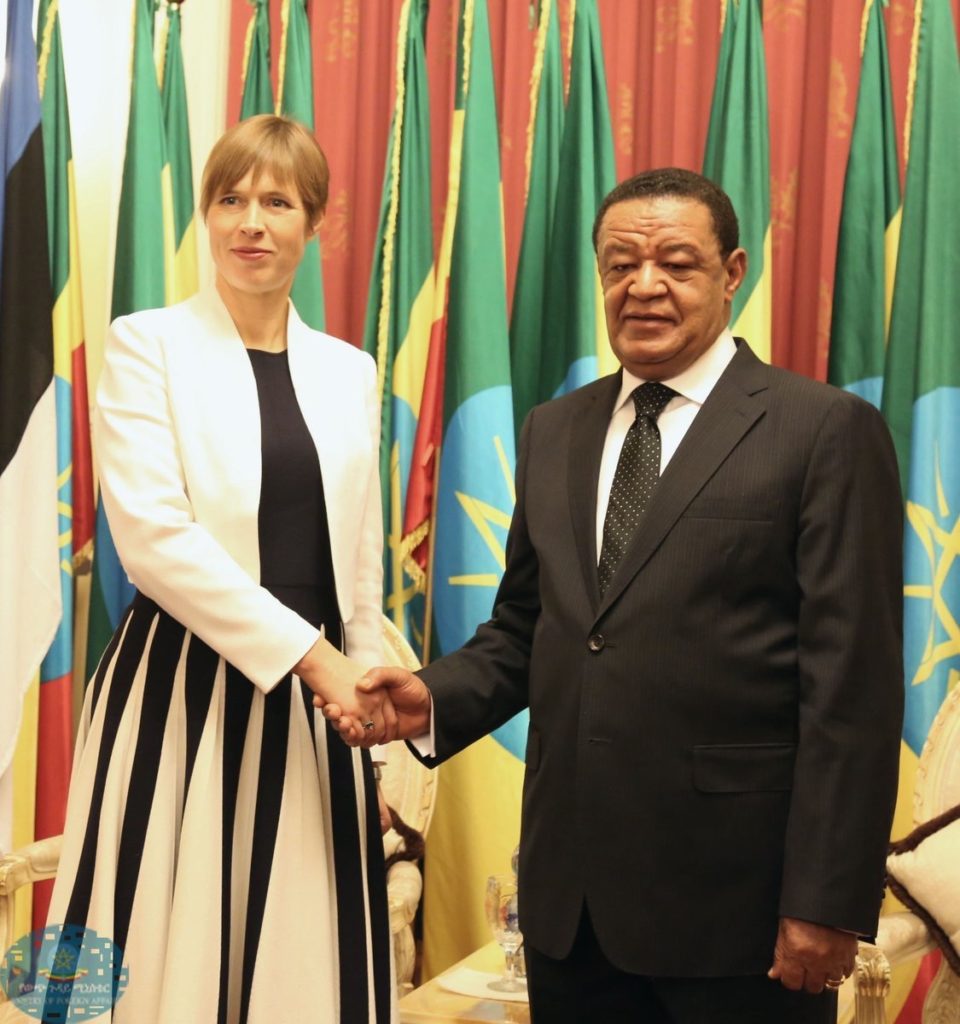
Dr. Workneh receives credentials of German & Swedish Ambassadors

Dr. Workneh Gebeyehu and German Ambassador Brita Wagener

Foreign Minister Dr. Workneh Gebeyehu received copies of credentials of Ambassador Brita Wagener of the Republic of Germany and Ambassador Torbjorn Pettersson of Sweden on the 14th of September 2017.

Minister Workneh took note of the already strong bilateral ties between Ethiopia and the Republic of Germany. He also described Germany as a key partner to Ethiopia’s development endeavor. Ambassador Mrs. Brita Wagener, on her part, said her country is keen to further engage with Ethiopia in areas of economic cooperation.

Dr Workneh Gebeyehu and Swedish Ambassador Torbjorn Pettersson

Holding talks with Ambassador Torbjorn Pettersson of Sweden, Dr. Workneh underlined Ethiopia’s readiness to work

more closely with Sweden, adding that the bilateral cooperation would be strengthened further ahead. Ambassador Torbjorn Pettersson mentioned that the two sides have signed a new developmental cooperation agreement, which he said, would open a new venue for engagement and collaboration. The Ambassador also revealed that anchor Swedish companies would recently come to Ethiopia to engage in various investment sectors in the country.

Ethiopian Prime Minister: “We will continue to defeat long rooted arch-enemy, poverty”

“We are defeating our long rooted arch-enemy – poverty – since the beginning of the third Ethiopian millennium and we will continue to do so”, said Prime Minister Hailemariam Dessalegn.

The Premier addressed tens of thousands of Ethiopians gathered Sunday night at the millennium hall to celebrate the 2010 Ethiopian New Year.

Recalling that the country has witnessed an average of 10 percent growth over the past more than ten years, Hailemariam said all Ethiopians should further advance their strong commitment in achieving the country’s development goals.

Modernizing agriculture, industrial development, strengthening small and medium enterprises, and attracting FDI are among the priority areas in the New Year, he pointed out.

He also said that an extensive work will be done to equip the youth with the up to date technologies while creating an abundance job opportunities in urban areas.

In addition, empowering women and make them active participants of and beneficiaries from the overall development of the country is also continue to be a priority.

Speaking of politics, the Premier said activities geared towards maintaining the multi-party system and enhance the democratization process will further be continued.

The government, as a continuation of its in-depth evaluation, will work to root out any poor governance and rent-seeking attitude, he emphasized.

Noting that Ethiopians had managed to maintain the unity even during in times of adversity, the Premier urged the public to continue to strengthen the culture of peaceful coexistence and harmony.

Hailemariam wished that the 2010 Ethiopian Year be a year of peace, unity, and development. (ENA)

State Minister Hirut welcomes newly appointed EU Ambassador

On the 13th of September 2017, State Minister for Foreign Affairs, Hirut Zemene received the newly appointed European Union Ambassador for European Union (EU) office in Addis Ababa, Mr Johan Borgstam.

The State Minister emphasized that the government of Ethiopia attaches significant importance to its relations with the EU.

Hirut added that Ethiopia is looking forward to strengthening the strategic partnership with the European Union on key areas of cooperation, including migration, terrorism, job compact, EU-Africa relations.

Ambassador Johan Borgstam commended Ethiopia’s Open-Door Policy for refugees from neighboring countries, adding that the EU is open for further discussion and collaboration with Ethiopia in all areas of engagement.

He also emphasized that the cooperation between Ethiopia and the EU should be further strengthened through the strategic partnership, which he said, has been key to address a range of common concerns.

Source: Ethiopian Ministry of Foreign Affairs