Double recognition for Ethiopia’s peacekeeping efforts

On 17 February, Ethiopia’s Minister for Foreign Affairs, Dr Workneh Gebeyehu, held a discussion with senior director for Africa, Cyril Sartor, on peace and stability in the Horn of Africa region.

During the meeting, Dr Workneh emphasized the need to strengthen relations between Ethiopia and the US to combat terrorism in the region as well as called for support for the ongoing South Sudanese peace process.

After praising Ethiopia’s hard work, Sartor said the US supports efforts of the Intergovernmental Authority on Development (IGAD) to maintain peace in the region In a related development, Dr Workneh also had a productive discussion with members of the US Congress on bilateral and regional issues.   Expressing their support for the ongoing reform program in Ethiopia, they said “Ethiopia is essential to the peace and stability of the region.”

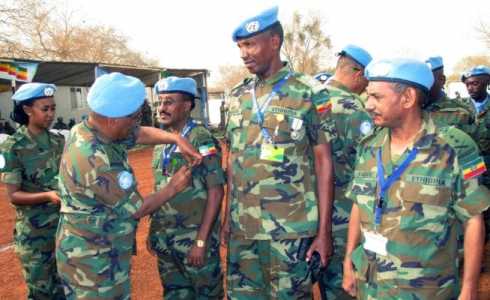
Two days later, about 860 peacekeepers from the 17th Motorized Battalion of the UN Interim Security Force for Abyei (UNISFA) received the UN Medal Awards in recognition of their tireless service and sacrifice to support peace efforts and to maintain security in Abyei Area.

The 17th Motorized Battalion has been deployed for over eight months in Diffra and has been carrying out UNISFA’s mandate by demilitarizing its area of responsibility, protecting communities, providing escorts for humanitarian agencies and securing UN personnel and facilities.

The UN Medals were presented as the sign of the UN’s gratitude and appreciation of the troops’ commitment, sacrifice, and hard work. In his speech during the awarding ceremony, Maj General Tesfaygidey Hailemichael, UNISFA’s Force Commander and Acting Head of Mission, emphasized the role of the UN peacekeepers in Abyei.

“Practically they have created relatively peaceful and calm security situation in their area of responsibility. The operationally challenging environment, under which they have had to operate day and night, sometimes in very tough conditions, has never deterred them in carrying out their duties. They work closely and hand in hand with communities and their leaders in order to bring peace to Abyei.”

“The Ethiopian people and government sent us as ambassadors of the international community to complete the task of ensuring peace and security in the Abyei area,” said and Col Hailu G/Hiwot, Battalion Commander of the 17th Motorized Battalion.

Ethiopia drops charges against 101 suspects, including Col. Demeke and Brig Gen Tefera

As per the decision of the Executive Committee of EPRDF, the Federal Attorney General dropped charges against 101 suspects on 16 Feburary, including Colonel Demeke Zewde. The other suspects include among others Getachew Ademe, Atalay Zerfu, Nigst Yirga and Teshager Woldemichael.

Of the suspects, 56 were charged with having links with Ginbot 7 and the remaining 41 having links with OLF.

In a related development, 18 inmates were granted pardon, including Brigadier General Tefera Mamo and Asaminew Tsige.

They will be released after their cases are reviewed by the Board of Pardon and once approved by President Mulatu Teshome.

Similarly, the Amhara regional state dropped charges against 224 suspects detained in North Gondar zone

The regional state also pardoned 55 inmates who have been imprisoned in Gondar and Chilga prison centres.

The detainees were previously charged with terrorism and participating in violence. They will be freed as of tomorrow. Five detainees have so far been released, it was noted.

Discover the new Ethiopian e-Visa

In June 2017, the Ethiopian Immigration and Nationality Affairs main Department in collaboration with Ethiopian Airlines finalized preparations for the e-visa service for international visitors to Ethiopia.

The e- Visa is processed and issued online on a single Web page where applicants apply, pay and secure their entry visa online.

Once the online application is approved, applicants will receive an email authorizing them to travel to Ethiopia and they will get their passport stamped with the visa upon arrival in Addis Ababa.

The process will save time, energy and cost for travellers to Ethiopia in addition to the simplicity and convenience that it facilitates.

Please refer the following requirements for Ethiopian eVISA.

  •  e-Visa application fees are not refundable
  •  Your passport must be valid for at least 6 months from the date you intend to enter Ethiopia.
  •  Currently, we allow travellers with e-Visa to enter Ethiopia via Addis Ababa Bole International Airport. Entry via other ports of entry is not allowed.
  •  The validity of Ethiopian e-Visa starts from the date you intend to enter Ethiopia, not from the date of issue.
  •  Please carefully read and comply with the important notices and guidelines stated in each step of the application form.
  •  Travelers who are nationals of or have a permanent residence permit in one of the eligible countries can apply for e-Visa.
  •  Currently, we are issuing single entry tourist visas and conference visas only.

Are you eligible for an e-Visa? 

Citizens from the following countries are eligible for e-Visa:

  1.                 Argentina
  2.                 Australia
  3.                 Austria
  4.                 Belgium
  5.                 Brazil
  6.                 Canada
  7.                 Czech Republic
  8.                 Denmark
  9.                 Finland
  10.                 France
  11.                 Germany
  12.                 Greece
  13.                 India
  14.                 Ireland
  15.                 Israel
  16.                 Italy
  17.                 Japan
  18.                 Kenya   (exempted)
  19.                 Kuwait
  20.                 Luxembourg
  21.                 Mexico
  22.                 Netherlands
  23.                 New Zealand
  24.                 North Korea
  25.                 Norway
  26.                 Poland
  27.                 Portugal
  28.                 Russia
  29.                 Slovakia
  30.                 South Africa
  31.                 South Korea
  32.                 Spain
  33.                 Sweden
  34.                 Switzerland
  35.                 Thailand
  36.                 United Kingdom
  37.                 United States
  38.                 China
  39.                 Djibouti (exempted)

Learn more about e-Visa here: https://www.evisa.gov.et/#/home


PM Hailemariam submits letter of resignation

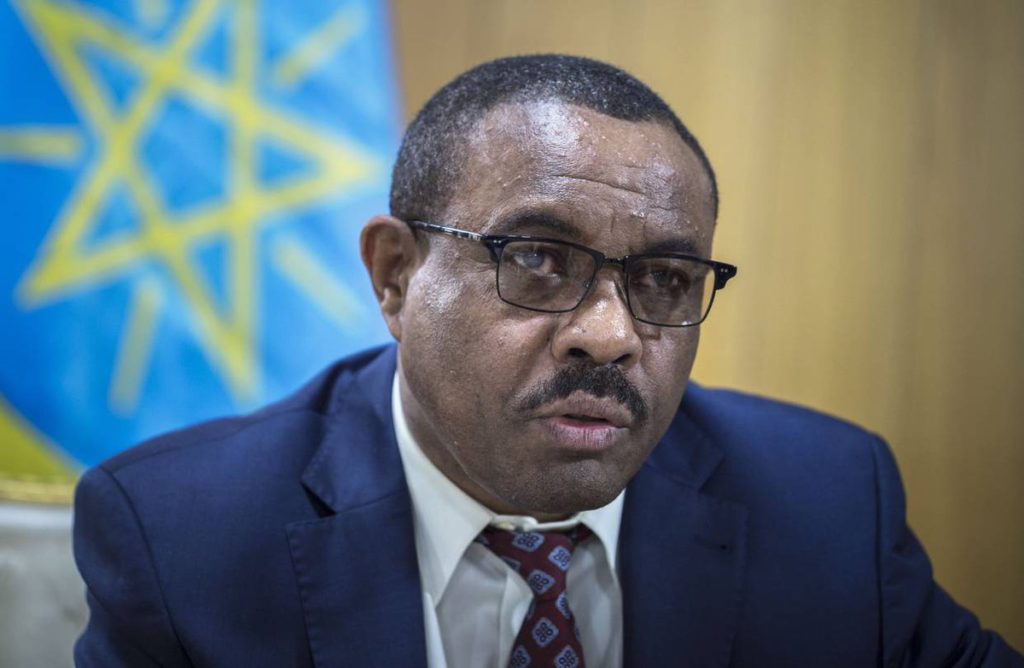
Prime Minister Hailemariam Desalegn has submitted a resignation letter as both Prime Minister and Chairman of the Ethiopian People’s Revolutionary Democratic Front (EPRDF) on 15 February. PM Hailemariam said his decision to resign from the leadership of both EPRDF and the government is to be part of the efforts being made to ensure lasting peace and deepen democracy in the country.

The Executive Committees of his party, the Southern Ethiopian People’s Democratic Movement (SEPDM) and the EPRDF’s have both accepted his request to resign.

Shiferaw Shigute, head of EPRDF office, said PM Hailemariam Desalegn has served as chairman of EPRDF and Prime Minister of Ethiopia for about the last six years and contributed a lot to the ongoing reform programs.

He has also served as chairman of the Southern Ethiopian People’s Democratic Movement (SEPDM) for the past 17 years and played a crucial role in guaranteeing peace, democracy and good governance in the country move forward following the unexpected death of the great leader Meles Zenawi,

The Council of EPRDF will democratically elect a replacement at its next meeting. The Premier expressed his hope that his party and government will make history again by conducting peaceful power transition.

However, PM Hailemariam will continue to serve in his current positions until the EPRDF Council, and the House of People’s Representatives (HPR) approve his letter of resignation.

He is currently doing his job and will continue until a new Premier is appointed.


Local investor to develop 100 MW from solar energy

A private investor is going to develop a-100 megawatts (MW) of solar energy in Ethiopia for the first time, according to the Ministry of Water, Irrigation and Electricity (MoWIE).

A local investor, who will build the solar farm, has been identified following the culmination of the bidding process. Preparations are underway to ink the final agreement with the inventor. The solar energy farm will be built around Metehara, 200 km southeast of the capital Addis Ababa.

After selling the power it generated to the government for 20 consecutive years, the investor will hand over the farm to the government. The construction of the farm is expected to take 7-8 years.

Ethiopia has designed favorable policy and strategies for the private sector to engage in hydro-power, wind and solar energy development.   The country has been providing various incentives to attract more foreign and local investors and companies in the sector.

In addition to solar energy, private sector investors are participating in the development of geothermal energy, such as the two Canadian companies that will develop geothermal energy plants at Corbetti and Tulu Moye. Each company is expected to generate 500MW.

Ethiopia seeks to raise its power generation capacity to 17, 347 by 2020. It has so far developed 4, 284 MW and the construction of projects that have the capacity to generate 9,000 MW is also underway in various parts of the country.

Massive release of prisoners continue

Ethiopia has released hundreds of prisoners and dropped charges against others in recent weeks. Following the decision of the Executive Committee of EPRDF, the government of Ethiopia has been dropping charges and pardoning individuals imprisoned for inciting violence, terrorism and religious extremism.

Additional suspects whose charges were dropped or were granted pardon were released from prison on 14 February, including Eskinder Nega, Andualem Arage and former chief administrator of Gambella Regional State, Okelo Aquay, Ustaz Ahmedin Jebel, Kalid Ibrahim, Ahmed Mustefa and Mohammed Abate. Seven suspects, including Bekele Gerba, were also freed on 13 February.

Prosecutors in Ethiopia also dropped charges against two bloggers on 14 February and announced they would abandon the prosecution of a third amid a wave of prisoner releases.  Six Zone 9 bloggers were arrested in April 2014. Two were released in July of the following year, while the remaining four were charged with terrorism.

http://www.fanabc.com/english/index.php/news/item/11345-ethiopia-releases-detainees,-including-eskinder-nega,-andualem-arage-and-ahmedin-jebel

Four foreign companies set to commence production at Kombolcha industrial park

Four foreign companies have begun installing machinery to commence production at the Kombolcha industrial park, Amhara regional state.

Azimeraw Dejene, project coordinator of the park told ENA that the industrial park is attracting various global companies.

Companies from South Korea, China, Italy and the US have so far been installing and transporting industrial machinery since last September.

When the companies start production, they will stimulate industrial activities in the area and create a good opportunity for local companies to gain better experience and, he said.

The four companies are expected to go operational this Ethiopian fiscal year once the finished installation of machinery.

They will create jobs for 20,000 people once they started production with their full capacity, he said.

Built at a cost of 90 million US dollars, Kombolcha industrial park was inaugurated last July in attendance of Prime Minister Hailemariam Desalegn.

Fairfax Africa Fund, Asia partner to build $4 billion refinery in Ethiopia

A US-based investment firm is collaborating with partners from Asian countries to build an oil refinery in Ethiopia.

The project, worth $4 billion, is expected to serve the country and the rest of East African market. Located in the eastern Ethiopian town of Awash; some 220 kilometres from the capital Addis Ababa, the refinery will have the capacity to process 120,000 barrels per day. That is equal to six million metric tonnes of crude oil.

“Here in Ethiopia over the next ten to fifteen years there is going to be a very massive transformation in the economy from what used to be an agrarian to what is to become an industrial based economy,”  said Zemedeneh Negatu, Global Chairperson at the Fairfax Africa Fund. “That means a very significant increase in transportation which is what is what this refinery comes into. By the way, it’s not just a refinery. The refinery is just the first component…we are going to have an entire petrochemical over the next fifteen years.”

At the moment Ethiopia uses three million metric tons of fuel every year.

“The aim is to service all of East Africa. To just give you a very quick reference point …all of East Africa…which is a couple of hundred million people…has just one tiny refinery. And yet East Africa is actually the fastest growing region in Africa as a whole. And on the later of that the fact that there is a lot of urbanisation going on we figured this is a viable project. Now the 4 billion is an estimate. It could be slightly lower or it could be slightly higher.” Negatu said.

Reports suggest Ethiopia built its first oil refinery in 1967 in the Port of Assab in current Eritrea.

The then refinery built by Russian engineers had the capacity of producing 500,000MT of fuel per year only. Then it was upgraded to process 800,000MT of fuel per annum.

But the new facility will eventually have the capacity of refining 12 million metric tons of crude oil yearly. That will boost the confidence of Ethiopia’s energy security program.

Intrade Co to invest $100 million to build a textile factory in Ethiopia

The British firm Intrade Co, specialized in agricultural raw materials, will disburse $100 million for the construction of a textile factory in Ethiopia.

The facility will be built over more than 10 ha inside Mekelle industrial park, in Tigray region located 783 km from Addis-Ababa. The construction is set to last 18 months and is expected to generate 1,300 local jobs once the operational phase is launched.

This new investment reflects a general trend of many foreign investors attracted in particular by the competitive salaries, an abundance of energy as well as a favourable fiscal environment.

Lower valley of the Omo river: Ethiopia’s Southern jewel

Located in Southwest Ethiopia, the Lower Omo Valley is one of the most diverse areas in East Africa. Home to some of Africa’s most traditional tribes, the region was once inhabited by our earliest ancestors and is the place where the earliest known discovery of Homo Sapiens fossil fragments was found. This exceptional archaeological and cultural wealth led the area to be designated a UNESCO World Heritage Site in 1980. The spectacularly beautiful Omo Valley also boasts a diverse ecosystem ranging from arid lowlands to lush high-mountain areas, volcanic outcrops, and one of the few remaining ‘pristine’ riverine forests in semi-arid Africa which supports a wide variety of wildlife.

Archeological Wealth

Ethiopia possesses an exceptional archaeological wealth, exceptionally significant to the research of prehistoric human and its material culture. The site was designated a UNESCO World Heritage Site in 1980 for its renewed prehistoric discovery of fossils and exceptional present cultural activities. The Unesco also noted that the discoveries of ancient stone tools in an encampment offers evidence of the oldest known technical activities of prehistoric beings, thus making the property one of the most significant for mankind. All these awe-inspiring archaeological findings contributed to give Ethiopia the title of “cradle of mankind”.

The entire Omo river basin is significant geologically and archaeologically: the age-old sedimentary deposits in the Lower Omo Valley are world renowned for the discovery of many hominid fossils, that have been of fundamental importance in the study of human origins and evolution. These fossils include the remains of Homo gracilis and Australopithicines estimated at some 2.5 million years old, as well as the earliest known bone fragments of Homo sapiens, dating from 195,000 years ago.

A mosaic of cultures

In addition to its scientific significance, the tribes that live in the lower Omo Valley are believed to be among the most fascinating on the continent of Africa and around the world, as the lower valley of the Omo has been a crossroads for thousands of years as various cultures and ethnic groups migrated around the region. More than forty tribes reside in the area and the valley is home to about 200,000 people.

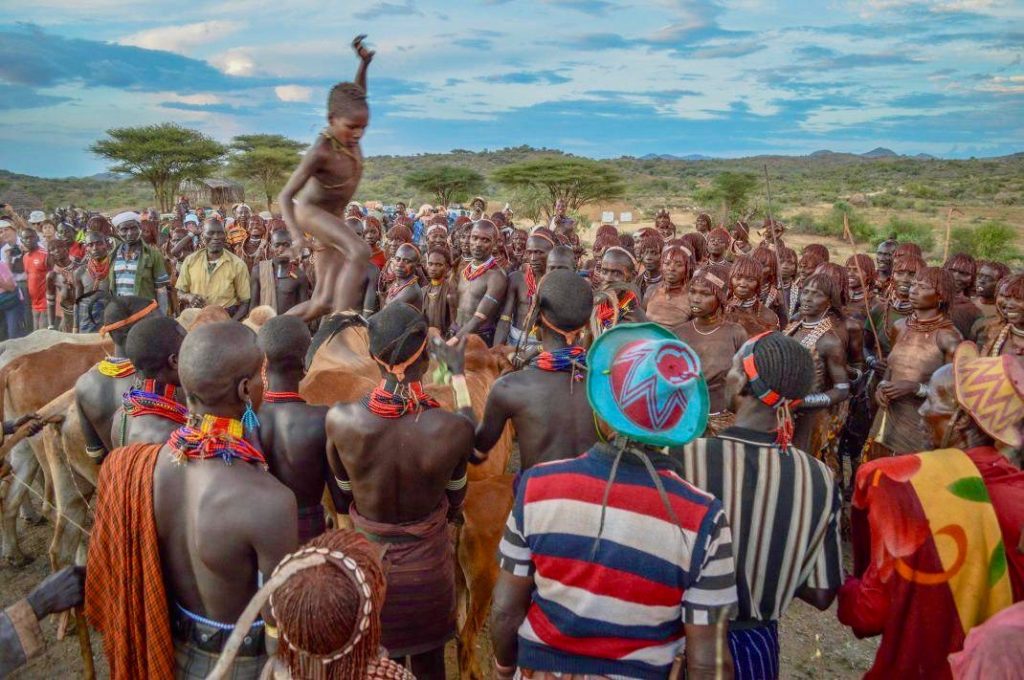
The authenticity and cultural diversity of the Mursi, Suri, Nyangatom Dizi and Me’en have attracted researchers on diversity. The place is also a home for Omotic-speakers of the South Omo and includes the Ari, Maale, Daasanach, and Hamar-Banna. In her article titled ”Why Is Ethiopia’s Omo Valley Region So Rich in Culture?” Albee Yeend (2017) observed the distinctive features of each tribe: the Karo’s decorate their bodies and hair with chalk paint to imitate the guinea fowl and paint multi-coloured facemasks; the Mursi, for their part, are quite simply one of the most fascinating tribes, as women wear huge clay lip-plates while men have stick fighting rituals. As for the Hamer tribe, the men practice the ‘Bull Jumping’ – a three-day initiation rite held every spring – and the women are some of the most beautiful in East Africa; and let’s not forget the crocodile- hunting Dassanech, the most southerly of the tribes who live in Omo Valley. The Bana, Tsamai, Konso, Erbore, Borana and Gabbra have their own equally exclusive and interesting customs.

The traditions of the Omo Valley tribes are deeply embedded, and each tribe’s identity is vividly clear, even to outsiders. Researchers have noted that this extraordinary wealth of traditional human cultures and small tribal groups exhibiting an amazing wealth of body decoration and adornment was due to their long isolation. Most travel advice websites, such as Lonely Planet, strongly recommend visitors to experience the fascinating culture of the ethnic groups settled in the Omo Valley by visiting traditional Daasanach villages, watching Hamer people performing a Jumping of the Bulls ceremony or seeing the Mursi’s mind-blowing lip plates.

Spectacular landscapes

Besides cultural attractions, the Lower Omo Valley is endowed with astonishing flora and fauna. It is a spectacularly beautiful area with diverse ecosystems including grasslands, volcanic outcrops, and one of the few remaining ‘pristine’ riverine forests in semi-arid Africa which supports a wide variety of wildlife.

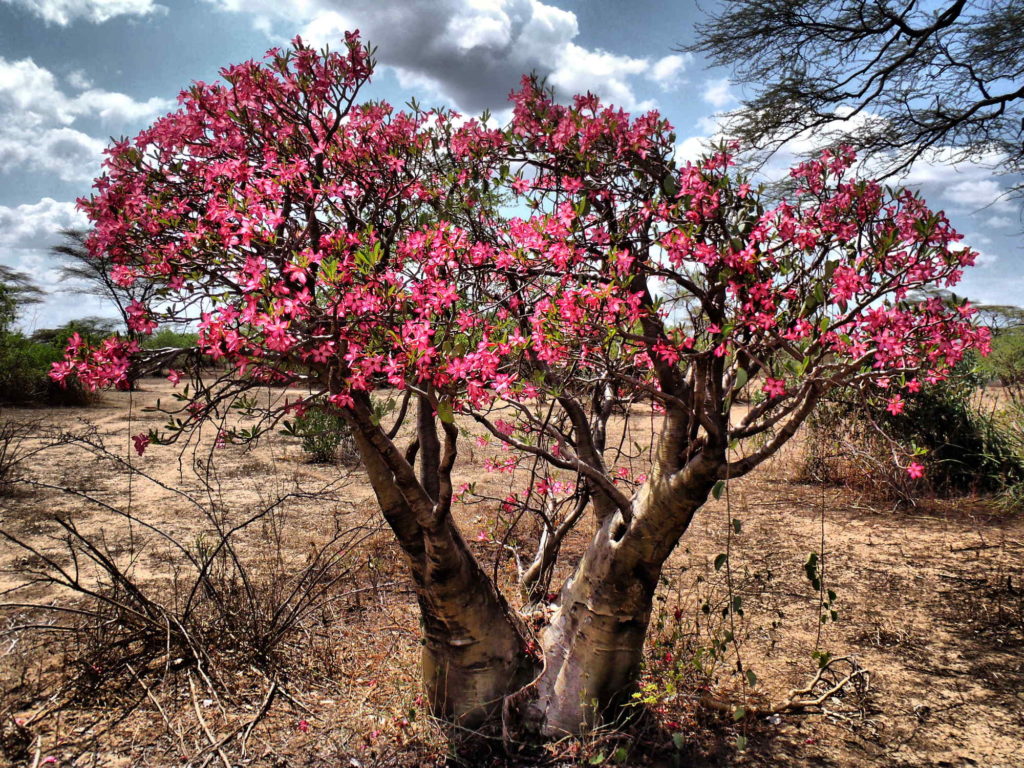
The Mago National Park intersects the park and flows into the Omo River covered by dense acacia woodland. The Park is actually the home for over 100 types of wild animals of which are the buffalo and elephant, lesser kudu and a few other antelopes, leopard, jackals, cheetahs and lions, olive baboons and velvet monkeys roam within the park’s boundaries. The area is highly favourable for birdwatchers as it inhabits 300 species of birds like the Egyptian plover; Pel’s fishing owl, the Black-rumped waxbill and the dusky babbler. The area also includes other national Parks of Ethiopia such as the Omo National Park and Chelbi Wildlife Reserve. The valley is also the home of the Adenium obesum or the Desert Rose, a wonderful dark and light pink little trees whose trunk looks like a very small Baobab tree. As the area is more accessible than it was a decade ago due to new road networks and the development of telecommunication networks and sustainable tourism tours, Omo Valley is increasingly a must-see destination for all the lovers of scientific research, nature and culture. If you visit the area on your way from Arba Minch to Keyafer to Jinka market in the afternoon, you might have the chance to witness the wedding ceremony of a Hamer couple or an incredible bull jumping ceremony. If you manage to visit this place, its fond memories shall remain with you forever. ■