Ethiopia reaffirms open-door refugee policy amid continuing refugee influx


On 26 February, Ethiopia reaffirmed its open-door policy for refugees that are flocking into the country, mainly from its unsettled neighbouring countries.

The Ethiopian refugee agency (ARRA) said that even though the country presently shelters more than 900,000 refugees, it will maintain its open-door policy towards refugees and “continue to receive new arrivals from several of its neighbours, notably from South Sudan, Somalia, Eritrea, Sudan and Yemen.”

Ethiopia, which is home to the second largest refugee population in Africa next to Uganda, further affirmed its commitment to improving refugee lives through the Comprehensive Refugee Response Framework (CRRF) and the Nine Significant Pledges it has made in September 2016.

“As a country proud for its long-standing history of hosting refugees and home to the second largest refugee population in Africa, our commitment to improving refugee lives will continue unabated in light of the CRRF and the Nine Significant Pledges we made in September 2016,” Zeynu Jemal, Deputy Director of Ethiopian Administration for Refugee and Returnee Affairs (ARRA), told journalists.

Jemal also revealed Ethiopia’s plan to formulate a strategic plan that envisaged to help refugees both through support packages and prevention of challenges towards bringing lasting solutions.

“We are now in the process of formulating a Ten-Year Strategic Plan to comprehensively respond to the multifaceted needs of refugees that is creating strong linkages between humanitarian assistance, development and of course peace-building,” Jemal said.

The Ethiopian government, through ARRA and other governmental institutions, is currently implementing a program of protection and hospitality of refugees in several refugee camps across the country.

The protection program guarantees, among other things, education for children and youth, health services and the distribution of basic needs, food and security.

Filippo Grandi, United Nations High Commissioner for Refugees, in his recent visit to Ethiopia’s Gameblla regional state, which is housing most of the South Sudanese refugees, had praised efforts made by the Ethiopian government in handling the regional refugee crisis.

“Ethiopia is a very good model of how a country with limited resources and a great challenge of its own keeps its doors open, its arms open to people from neighbouring countries that are in trouble and seek protection here,” Grandi said during his visit.

Interview with Anna Dersie, co-founder of Ethiopia Traditions Travel Tours

Discover our interview with Anna Dersie, a travel photographer who fell in love with Ethiopia.

With her husband Teshu, she created Ethiopia Traditions Travel Tours to build a bridge between Ethiopia and Belgium and offer tourists an authentic travel experience.

Anna and Teshu want to offer a true in-depth insight of Ethiopia and transform their travel into a lifetime experience. In addition, they are dedicated to develop a responsible and community-based tourism to benefit local communities and enhance visitors’ experience through exchange with local people.

In the video, she discusses the benefits and challenges of tourism in Ethiopia as well as her experience working in the country.

Power sales abroad earns Ethiopia over $35mln in half year

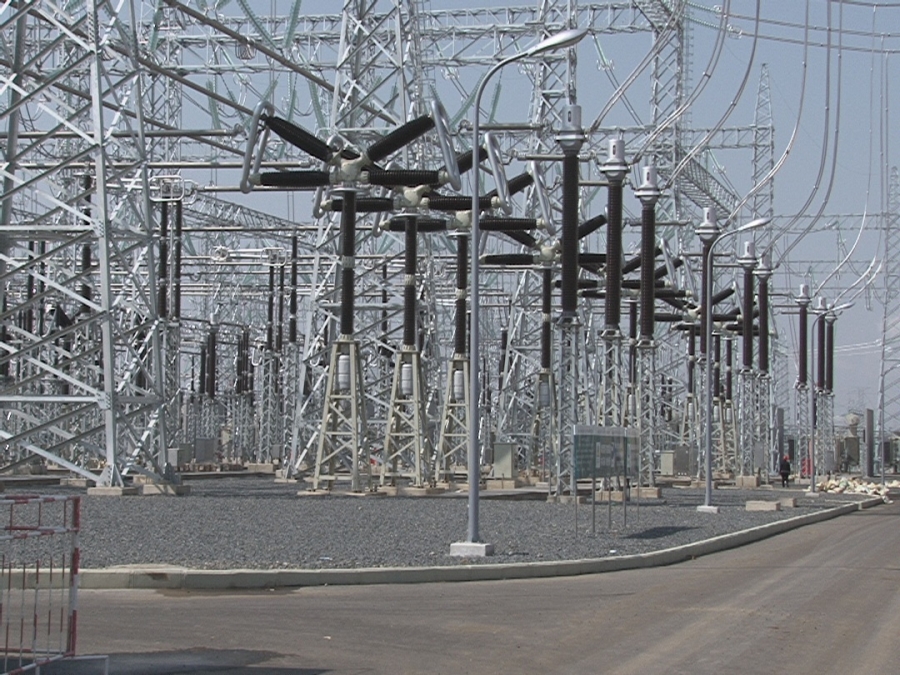
Ethiopia secured over 35 million US dollars from power sales abroad, according to the Ministry of Water, Irrigation and Electricity (MoWIE).

The revenue was obtained from power sold to Djibouti and Sudan in the first half of this Ethiopian fiscal year (2017/18), Bizuneh Tolcha, public relations director at the ministry told Ethiopian News Agency (ENA).

According to him, power export to Djibouti earned the nation 18,510,000 US dollars, while the power sold to Sudan fetched 16, 545,000 US dollars.

Ethiopia and Kenya are also building a 1,045 Km power transmission line that will link grids of the two countries.

The 500KV line, which runs from Wolayita Sodo in south-central Ethiopia to Suswa in Kenya, will enable Kenya to import electricity from Ethiopia.

The director said that some 433 km of the line lies in Ethiopia and 612 km in Kenya.

Kenya had already agreed to buy 400 megawatts of electricity upon completion of installation of the power line, Bizuneh noted.

Ethiopia has also a plan to sell power to Tanzania, he said, adding Burundi and Rwanda also showed interest to import power from Ethiopia.

In a recent interview with Bloomberg, Dr Engineer Sileshi Bekele, Minister of Water, Irrigation and Electricity said Ethiopia is seeking to raise its power generation to 17,000 MW by 2020 from 4,300 MW now.

Invitation Workshop Ethiopie – la Terre des Origines | 13 mars 2018 |

Save the Date – Workshop Ethiopie – la Terre des Origines

Voir dans votre navigateur

H.E. Meaza G/Medhin, State Minister of Tourism,
H.E. Teshome Toga Chanka, Ambassador of Ethiopia in Brussels, 
Mr. Yohannes Tilahun, CEO of The Ethiopian Tourism Organisation and
Mr. Bisrat Tedla, Area Manager Ethiopian Airlines in Belgium

vous invitent le 13 mars
pour un trade & press workshop 
pour découvrir l’Ethiopie,
la Terres des origines
.

Saviez-vous que l’Ethiopie …

  • est le pays où tout a commencé … Vous avez déjà entendu paler de Lucy?
  • a une ère personnelle et propre écriture?
  • n’a jamais été colonisé?
  • est le berceau de notre café?
  • the place to be is for trail runs?

L’Ethiopie est un melting-pot fascinant de la culture unique, de la nature et des animaux indigènes. Pour ces raisons et bien d’autres, l’Éthiopie est La Terre des Origines qui vaut l’effort d’être (re)découvert.
 
En collaboration avec l’ambassade d’Éthiopie à Bruxelles, l’office du tourisme éthiopien, l’Ethiopian Tour Operator Association, Ethiopian Airlines, la plate-forme africaine de l’Université de Gand et certains des principaux touropérateurs belges, nous organisons une soirée d’information fascinante:

  • le mardi 13 mars de 19h à 21h30
  • dans le foyer de l’Auditorium Oehoe (Bloc E),
    Faculté des Sciences de la bio-ingénierie de l’Université de Gand
    Coupure Links 653, 9000 Gand

Voir sur Google-Maps »

Vous verrez que c’est facilement accessible:

  • en voiture (près de la jonction E17 et E40 – parking gratuit sur le campus)
  • en transports en commun (10 min. en tram de la gare de Gand Saint-Pièrre)

Gardez cette soirée libre
 ou inscrivez-vous tout de suite >>  

Merci à notre partneaires:


Bien cordialement,

Axel De Corte

+32 (0)476 89 53 26 
axel@koombanabay.eu
www.koombanabay.eu

Another 1,500 Prisoners Released in Ethiopia

Authorities in Ethiopia’s Somali region have released about 1,500 people from prison. They include people arrested under Ethiopia’s anti-terrorism law and other criminals.

Up to 6,000 prisoners across Ethiopia have now been released within the last month. Last week, the government freed several prominent critics and opposition leaders, including journalist and blogger Eskinder Nega


Nile Day celebrated in Addis Ababa

East African countries gathered on 22 February in Addis Ababa to celebrate the Nile Day 2018 under the theme of “The Nile: Shared River, Collective Action.” The day is a commemoration of the establishment of the unprecedented Nile Basin Initiative (NBI) on February 22, 1999.

Speaking at a meeting marking the day at the ECA, President Mulatu Teshome said that Nile riparian countries need to cooperate for the equitable utilization of the waters of the Nile for the prosperity of their peoples.

The economic activity in the sub-region is based on backward rain-fed agriculture which made it extremely difficult to meet the basic needs of the population, he said.

He also noted that the effects of climate change had further complicated the livelihood of the population which is still living in abject poverty.

Mulatu said that riparian countries have no other choice except to effectively cooperate for the equitable utilization of the resource.

Minister of Water, Irrigation and Electricity, Dr Engineer Seleshi Bekele said more than ever, Nile basin countries need to scale up their cooperation at a better stage.

The Minister requested for further promoting and strengthening of the objectives of the Nile Basin Initiative.

Sudanese Minister of Water Resources and the Egyptian resident ambassador who were present on the occasion expressed their readiness to cooperate with Nile Basin countries on the issues of the equitable utilization of the resources of the Nile.

Ethiopia Declares State of Emergency

On 16 February 2018, the Council of Ministers of Ethiopia declared a state of emergency to protect the constitution and constitutional order and to ensure the security and stability of the country.

The article 93 of the Ethiopian Constitution provides the power for the Council of Ministers to decree a state of emergency in case of external invasion, a breakdown of law and order which endangers constitutional order, natural disaster or an epidemic occur. During its 17-day meeting, the ruling party EPRDF was considering the issue of declaring a state of emergency if the situation did not improve in the weeks following the meeting.

For the past few weeks, the violence that has been going on in some areas of the country has undermined not only the security but also the harmony and peaceful coexistence of its peoples. These violent activities have been accompanied by attacks which led to the displacement, death and injury of people, damage on property and slowed investment. The decree also aims at protecting the freedom of movement and the rights of citizens to live wherever they choose. It was a response to the public’s request for protection as dangerous activities have continued to expand and recur again.

The decree allows law enforcement bodies to detain without court warrant any individual who orchestrated, led and organised or took part in criminal acts against the constitution and constitutional order. The individual will face justice after a necessary investigation. Law enforcement bodies can also seize materials which were utilised or could be used to commit crimes, search any houses, areas and vehicles as well as stop, ask and search a person without a court warrant. The State of Emergency will remain in effect for six months, and the decree will be tabled in the House of People’s Representatives with 15 days.

It’s hoped that the state of emergency will create a sober environment for the government to implement its broad and multifaceted reform program.

Double recognition for Ethiopia’s peacekeeping efforts

On 17 February, Ethiopia’s Minister for Foreign Affairs, Dr Workneh Gebeyehu, held a discussion with senior director for Africa, Cyril Sartor, on peace and stability in the Horn of Africa region.

During the meeting, Dr Workneh emphasized the need to strengthen relations between Ethiopia and the US to combat terrorism in the region as well as called for support for the ongoing South Sudanese peace process.

After praising Ethiopia’s hard work, Sartor said the US supports efforts of the Intergovernmental Authority on Development (IGAD) to maintain peace in the region In a related development, Dr Workneh also had a productive discussion with members of the US Congress on bilateral and regional issues.   Expressing their support for the ongoing reform program in Ethiopia, they said “Ethiopia is essential to the peace and stability of the region.”

Two days later, about 860 peacekeepers from the 17th Motorized Battalion of the UN Interim Security Force for Abyei (UNISFA) received the UN Medal Awards in recognition of their tireless service and sacrifice to support peace efforts and to maintain security in Abyei Area.

The 17th Motorized Battalion has been deployed for over eight months in Diffra and has been carrying out UNISFA’s mandate by demilitarizing its area of responsibility, protecting communities, providing escorts for humanitarian agencies and securing UN personnel and facilities.

The UN Medals were presented as the sign of the UN’s gratitude and appreciation of the troops’ commitment, sacrifice, and hard work. In his speech during the awarding ceremony, Maj General Tesfaygidey Hailemichael, UNISFA’s Force Commander and Acting Head of Mission, emphasized the role of the UN peacekeepers in Abyei.

“Practically they have created relatively peaceful and calm security situation in their area of responsibility. The operationally challenging environment, under which they have had to operate day and night, sometimes in very tough conditions, has never deterred them in carrying out their duties. They work closely and hand in hand with communities and their leaders in order to bring peace to Abyei.”

“The Ethiopian people and government sent us as ambassadors of the international community to complete the task of ensuring peace and security in the Abyei area,” said and Col Hailu G/Hiwot, Battalion Commander of the 17th Motorized Battalion.

Ethiopia drops charges against 101 suspects, including Col. Demeke and Brig Gen Tefera

As per the decision of the Executive Committee of EPRDF, the Federal Attorney General dropped charges against 101 suspects on 16 Feburary, including Colonel Demeke Zewde. The other suspects include among others Getachew Ademe, Atalay Zerfu, Nigst Yirga and Teshager Woldemichael.

Of the suspects, 56 were charged with having links with Ginbot 7 and the remaining 41 having links with OLF.

In a related development, 18 inmates were granted pardon, including Brigadier General Tefera Mamo and Asaminew Tsige.

They will be released after their cases are reviewed by the Board of Pardon and once approved by President Mulatu Teshome.

Similarly, the Amhara regional state dropped charges against 224 suspects detained in North Gondar zone

The regional state also pardoned 55 inmates who have been imprisoned in Gondar and Chilga prison centres.

The detainees were previously charged with terrorism and participating in violence. They will be freed as of tomorrow. Five detainees have so far been released, it was noted.